
Australian Border Force (ABF)
Australian Border Force (ABF) can randomly detain incoming passengers at Melbourne Airport and international points of entry, such as other major airports in Australia.
ABF can arrest and demand the PIN / Passcodes to electronic devices such as mobile phones and laptops of Incoming Passengers.
ABF can examine your personal property when you enter Australia. It can also intercept and seize parcels deemed to be prohibited goods pursuant to Commonwealth legislation, such as the Customs Act 1901 (Cth) or the Criminal Code Act 1995 (Cth).
In relation to entering Australia, International Passengers arriving in Australia, irrespective of whether they are Australian citizens returning home, or citizens of another country, go through the Australian Border Force area of the airport. Some passengers are taken aside where demands are often made by ABF officers to the Incoming Passenger to provide the PIN / Passcode to any electronic devices he or she has. From experience, male passengers are targeted more frequently.
The Incoming Passenger is isolated from other people with whom they are travelling. This can create an intimidating, stressful and frighting experience for the person taken aside and separated.
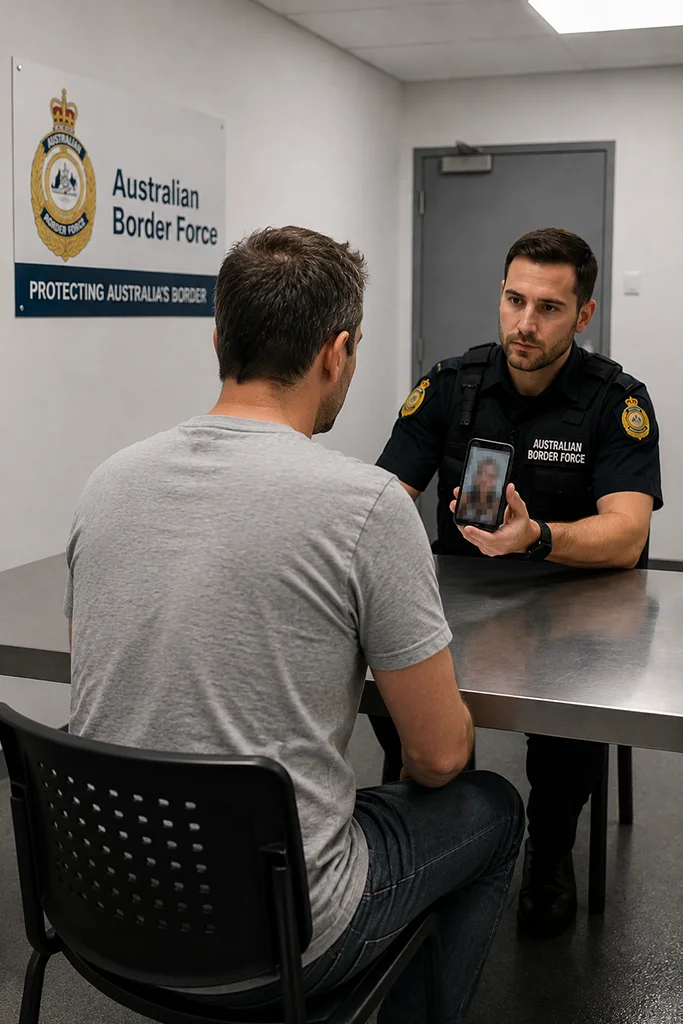
The Incoming Passenger is taken aside by ABF officers for the purpose of having his or her electronic device, usually a mobile phone, searched. After receiving access to the contents of the device the ABF search for illegal material, such as child abuse material or abhorrent material.
Incoming Passengers placed in this position are often threatened that if the PIN / Passcode is not provided the electronic device will be seized by the ABF. This places the Incoming Passenger in a stressful and pressured situation.
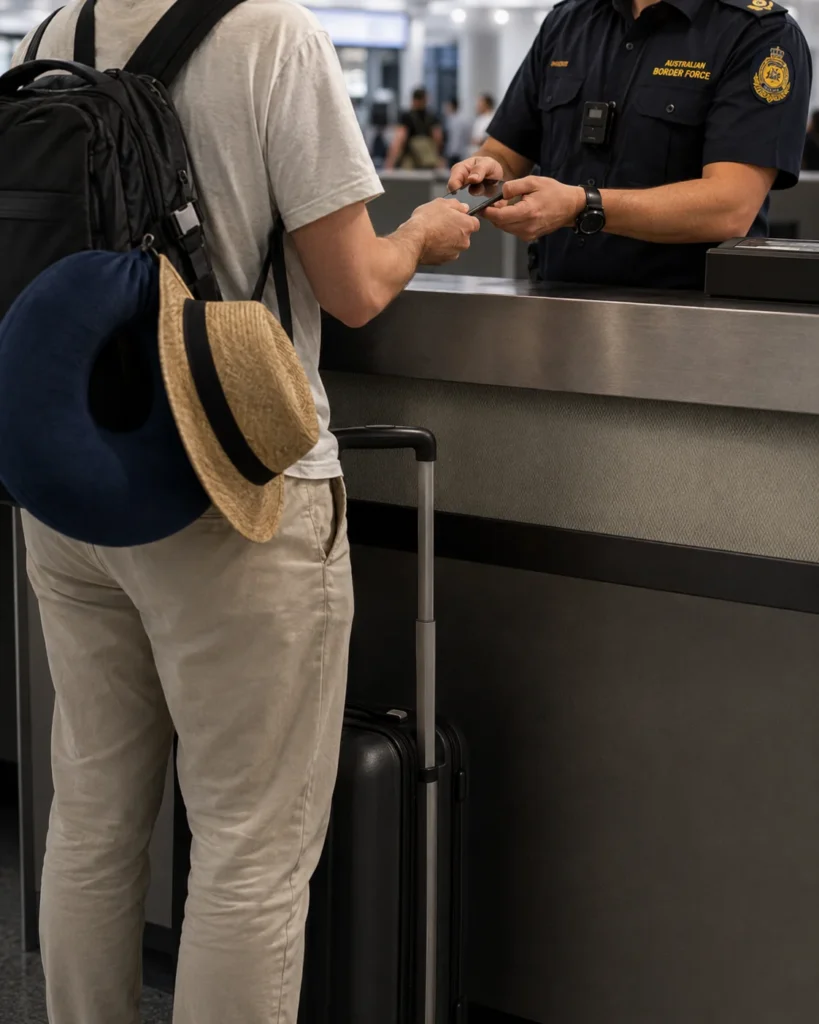
As an Incoming Passenger you are not required to give your PIN / Passcode in this situation.
However, in refusing to provide your PIN / Passcode the Australian Border Force or the Australian Federal Police can charge you with an offence:
- Section 201A of the Customs Act 1901 (Cth) – Person with knowledge of a computer or a computer system to assist access etc. The maximum penalty is imprisonment for 5 years or 300 penalty units, or both; or
- Section 3LA of the Crimes Act 1914 (Cth) – Person with knowledge of a computer or a computer system to assist access etc. The maximum penalty is imprisonment for 10 years or 600 penalty units, or both.
If the ABF seizes your electronic device, in other words your mobile phone or computer, the reason provided is usually ‘pending examination’. You will be provided with a Seizure Notice with a list of your property in their custody.
ABF should release your electronic devices within 14 days if it is determined that your device does not contain prohibited material. Otherwise, the ABF can seize your device on the grounds that an authorised person reasonably suspects the Goods are special forfeited goods such as Prohibited Imports being Objectionable Goods.
If the electronic device has been used to possess, distribute or import child abuse material, the penalty of possessing, distributing or importing child abuse material is usually a term of imprisonment.
If arrested, Australian Border Force will usually interview you at the airport. They are required to caution you about your legal rights and give you an opportunity to speak to a lawyer.
In these circumstances you are required to give your name, your address and your date of birth.
After these three questions, that must be answered, it is usually best to say ‘no comment‘ to all other questions asked by the ABF, irrespective of how tempting it may be to answer all of the questions.
Do your best to be calm and not be overwhelmed by the pressure of what can be an intimidating situation.
These include ‘travelling child-sex offender’ cases and offending remotely directed from Australia, including paid livestreamed abuse.
In this situation, people are often charged with:
- Subsection 233BAB(5) of the Customs Act 1901 (Cth) – Special offence relating to tier 2 goods. The maximum penalty is imprisonment for 10 years or 2,500 penalty units, or both;
- Section 273.6 of the Criminal Code Act 1995 (Cth) – Possessing, controlling, producing, distributing or obtaining child abuse material outside Australia. The maximum penalty is imprisonment for 15 years;
- Section 474.22 of the Criminal Code Act 1995 (Cth) – Using a carriage service for child abuse material. The maximum penalty is imprisonment for 15 years; or
- Section 474.23 of the Criminal Code Act 1995 (Cth) – Possessing, controlling, producing, supplying or obtaining child abuse material for use through a carriage service. The maximum penalty is imprisonment for 15 years.
The difference could be between imprisonment and your liberty.
For Advice Call 0452 100 888.